
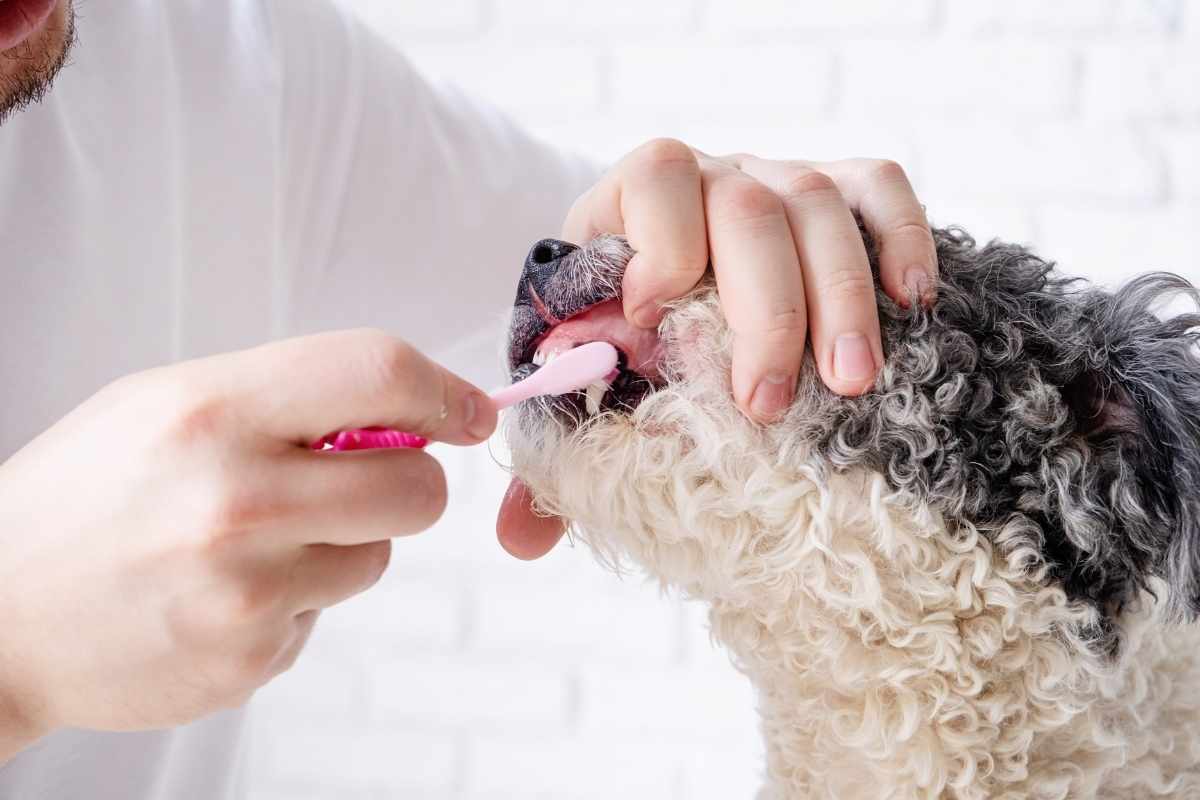
Brushing your dog’s teeth is one of the simplest ways to support better oral hygiene at home. Like people, dogs can develop plaque and tartar on their teeth, which may contribute to gum inflammation, periodontal disease, bad breath, and oral discomfort. Starting a dental routine early and making it positive can help your dog become more comfortable with regular brushing.
For pet owners researching pet dental care, learning the correct brushing technique can make daily dental care easier and more effective. Suffield Veterinary Hospital recommends treating oral health as an important part of overall wellness, alongside routine examinations and professional dental care when needed. Home brushing is useful, but it does not replace veterinary dental evaluations or professional cleanings when dental disease has already developed.
Why Should You Brush Your Dog’s Teeth?
Dogs naturally accumulate bacteria and food particles on their teeth. This can form plaque, a sticky film that develops on the tooth surface.
If plaque is not regularly removed, it can harden into tartar. Tartar is more difficult to remove at home and can contribute to irritation along the gumline.
Over time, untreated dental disease can cause:
- Red or swollen gums
- Persistent bad breath
- Gum recession
- Loose teeth
- Difficulty chewing
- Oral pain
- Tooth loss
- Changes in eating habits
Regular tooth brushing helps remove plaque before it has an opportunity to harden into tartar.
How Often Should You Brush a Dog’s Teeth?
Daily brushing is generally the ideal goal because plaque can accumulate continuously.
However, not every dog will immediately tolerate daily brushing. If your dog is new to dental care, begin gradually and work toward a consistent routine.
Even brushing several times a week can be more useful than rarely brushing at all. Your veterinarian can provide guidance based on your dog’s oral health, age, temperament, and individual needs.
Consistency matters more than trying to complete a long brushing session occasionally.
What Do You Need to Brush Your Dog’s Teeth?
Before beginning, gather the appropriate supplies.
Dog-Safe Toothbrush
Use a toothbrush designed specifically for dogs or an appropriate soft-bristled brush recommended by your veterinary team.
Dog toothbrushes may have smaller heads or designs that make it easier to reach different areas of the mouth.
Dog-Safe Toothpaste
Always use toothpaste formulated for dogs.
Human toothpaste should not be used for dogs because some formulations may contain ingredients that are unsafe for pets if swallowed.
Dog toothpaste is available in flavors designed to be more appealing to animals, which can make training easier.
A Calm Environment
Choose a quiet location where your dog feels comfortable. Avoid attempting the first brushing session when your dog is excited, frightened, tired, or distracted.
Step 1: Let Your Dog Get Used to Mouth Handling
Do not immediately put a toothbrush into your dog’s mouth.
First, help your dog become comfortable with you gently touching the face and lips.
Start by:
- Sitting somewhere calm with your dog.
- Gently touching the side of the face.
- Rewarding calm behavior.
- Briefly lifting the lip.
- Gradually touching the teeth and gums with your finger.
Keep these sessions short.
The goal is to create a positive association with having the mouth handled. If your dog becomes uncomfortable, stop and try again later.
Step 2: Introduce the Toothpaste
Once your dog is comfortable with gentle mouth handling, introduce a small amount of dog-safe toothpaste.
Let your dog smell and taste a tiny amount from your finger. Some dogs may be interested immediately, while others may need several sessions to become comfortable with it.
Do not force toothpaste into your dog’s mouth.
Allowing your dog to become familiar with the taste can make the transition to brushing easier.
Step 3: Introduce the Toothbrush
Next, allow your dog to inspect the toothbrush.
Place a small amount of dog-safe toothpaste on it and let your dog lick it.
At first, you may only touch the toothbrush against a few teeth rather than attempting to brush the entire mouth.
Reward calm behavior with praise or an appropriate small treat.
Gradual progress is often more successful than trying to complete a full brushing session on the first attempt.
Step 4: Start With the Outside Surfaces
When your dog accepts the toothbrush, begin brushing the outer surfaces of the teeth.
Gently lift the lip and place the toothbrush against the teeth near the gumline.
Use small, gentle movements.
Focus particularly on the outer surfaces of the back teeth, where plaque and tartar can accumulate readily.
You do not need to scrub aggressively. Gentle, consistent brushing is preferable to applying excessive pressure.
Step 5: Work Along the Gumline
The gumline is particularly important because plaque can accumulate where the teeth meet the gums.
Angle the brush gently toward the gumline and use small circular or back-and-forth motions, depending on the brush design and your dog’s tolerance.
Watch your dog’s body language throughout the process.
If your dog pulls away, becomes tense, growls, or appears distressed, pause the session rather than forcing the brushing.
Step 6: Gradually Increase Coverage
Once your dog accepts brushing of several teeth, gradually work toward covering more of the mouth.
You can divide the mouth into sections, such as:
- Upper right
- Upper left
- Lower right
- Lower left
This approach can make the process more manageable.
You do not need to rush. Some dogs may need days or weeks of gradual training before they comfortably tolerate a complete brushing session.
Step 7: End With Positive Reinforcement
Finish each session calmly and positively.
Praise your dog, offer affection, or provide a small appropriate reward. The objective is to help your dog associate tooth brushing with a positive experience.
Avoid turning brushing into a struggle.
If your dog consistently resists, discuss alternative dental care options with your veterinary team rather than forcing the process.
What If Your Dog Refuses to Have Its Teeth Brushed?
Some dogs may never become fully comfortable with a toothbrush, particularly if they have anxiety, painful dental disease, or a history of unpleasant mouth handling.
If your dog refuses brushing, consider discussing other options with your veterinarian.
Depending on the dog’s needs, these may include:
- Veterinary-approved dental treats
- Dental diets
- Dental chews
- Oral hygiene products
- Dental wipes
- Professional dental cleaning
These options should be selected based on your dog’s individual health and chewing habits.
Alternative products can complement brushing, but they should not automatically be considered an equivalent replacement for effective tooth brushing.
How Do You Know If Your Dog Has Dental Disease?
Dental disease can develop gradually, and some dogs may continue behaving normally despite oral discomfort.
Watch for signs such as:
- Bad breath that persists
- Red or bleeding gums
- Yellow or brown buildup on teeth
- Excessive drooling
- Difficulty chewing
- Dropping food
- Pawing at the mouth
- Reluctance to eat
- Swelling around the mouth
- Loose or missing teeth
- Changes in behavior
Some dogs may become less playful or irritable when experiencing pain.
If you notice these signs, schedule a veterinary examination rather than trying to treat established dental disease at home.
Can You Brush a Dog’s Teeth With Human Toothpaste?
No. Human toothpaste is not recommended for dogs.
People are generally able to spit toothpaste out after brushing, while dogs typically swallow toothpaste residue. Some human toothpaste formulations can contain ingredients that are inappropriate or potentially harmful to pets.
Use toothpaste specifically formulated for dogs and follow the product’s directions.
What About Tartar That Is Already on the Teeth?
Brushing is most effective at removing plaque before it hardens into tartar.
Once significant tartar has developed, brushing at home may not remove it effectively. Trying to scrape tartar off your dog’s teeth yourself can also injure the gums or damage the tooth surface.
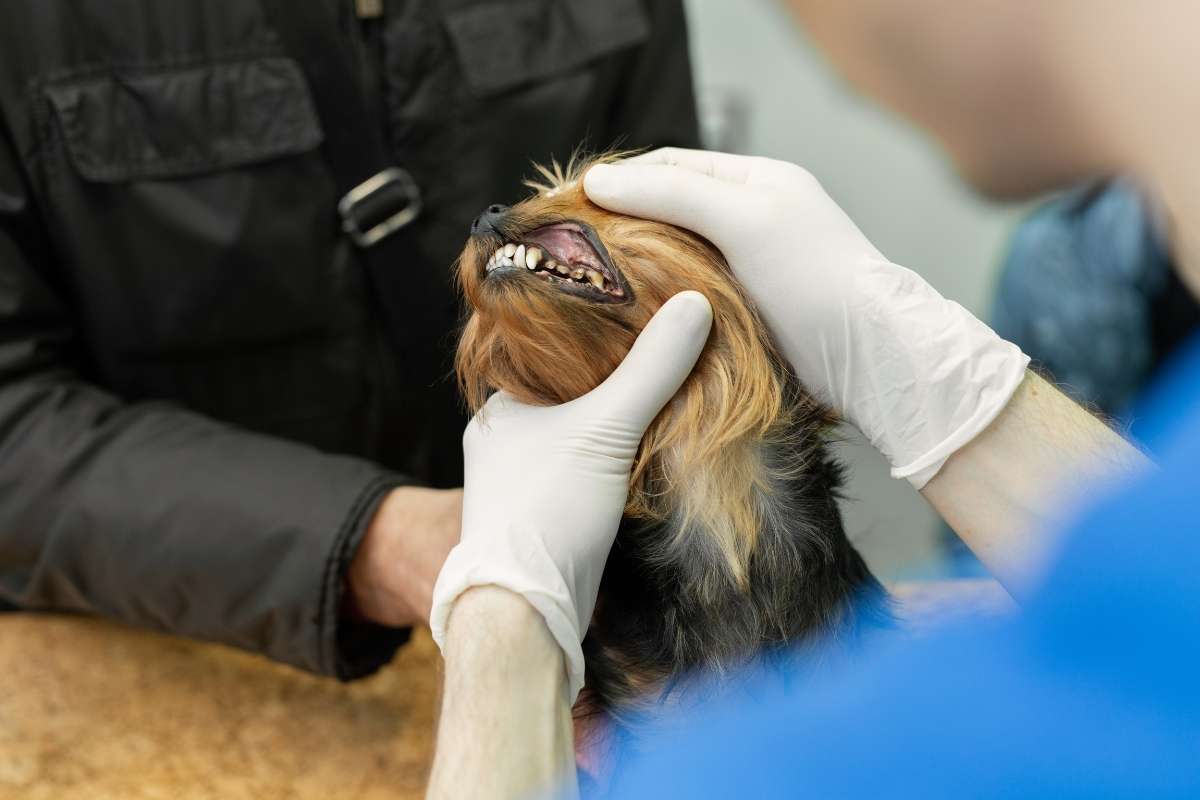
A veterinary dental examination can determine whether professional cleaning is appropriate.
Professional dental procedures may involve a thorough examination, cleaning above and below the gumline, polishing, and dental X-rays when indicated.
How Often Does a Dog Need Professional Dental Care?
There is no single schedule that applies to every dog.
Some dogs may develop dental disease more quickly because of factors such as age, genetics, tooth alignment, breed characteristics, diet, and existing oral health problems.
Routine veterinary examinations allow the oral cavity to be assessed and help determine whether professional dental care is needed.
Home brushing and professional veterinary dental care work together. One does not eliminate the need for the other.
Tips for Making Tooth Brushing Easier
A few simple habits can improve your dog’s experience:
Choose the Right Time
Brush when your dog is relaxed. Avoid starting immediately after an exciting activity or when your dog is overly energetic.
Keep Sessions Short
A brief, successful session is better than a long, stressful one.
Be Consistent
Try to establish brushing as part of your regular routine.
Reward Calm Behavior
Positive reinforcement can help your dog associate dental care with something enjoyable.
Do Not Force the Mouth Open
Forcing your dog’s mouth can increase fear and resistance. Gradual training is generally more effective.
Check the Mouth Regularly
Look for changes in the gums, teeth, breath, and eating behavior.
When Should You Talk to a Veterinarian?
Contact your veterinarian if your dog has signs of oral pain or if you are uncertain about its dental health.
Professional guidance is particularly important if your dog has:
- Significant tartar buildup
- Bleeding or swollen gums
- Loose teeth
- Facial swelling
- Difficulty eating
- Persistent bad breath
- A broken tooth
- Sudden changes in appetite
- Pain when the mouth is touched
A veterinary examination can determine whether the issue is simple plaque accumulation or a more advanced dental problem.
Regular tooth brushing is an important part of your dog’s preventive healthcare routine. By introducing dental care gradually, using dog-safe toothpaste, choosing an appropriate toothbrush, and focusing on gentle brushing along the gumline, you can help reduce plaque buildup and support better oral hygiene.
However, home dental care does not replace veterinary examinations or professional cleaning when dental disease is present. Watch for bad breath, gum inflammation, tartar, difficulty eating, or other changes that could indicate an underlying oral health problem.
If you are in Suffield, CT, and need guidance from a vet near you about your dog’s oral health, contact Suffield Veterinary Hospital. A veterinary team can assess your dog’s teeth and gums, discuss an appropriate home dental routine, and recommend professional care when necessary.
Frequently Asked Questions
Q1. How often should I brush my dog’s teeth?
Ans: Ideally, brush your dog’s teeth daily. If your dog is new to brushing, start gradually and work toward a consistent routine. Even brushing several times a week can help reduce plaque buildup.
Q2. What toothpaste should I use for my dog?
Ans: Use toothpaste specifically formulated for dogs. Human toothpaste should not be used because dogs generally swallow toothpaste rather than spitting it out, and some human formulations contain ingredients that are inappropriate for pets.
Q3. At what age should I start brushing my dog’s teeth?
Ans: You can introduce puppies to gentle mouth handling and tooth brushing when they are young. Early training can make dental care easier as they mature. Adult and senior dogs can also learn to tolerate brushing with gradual, positive training.
Q4. Can brushing remove tartar from my dog’s teeth?
Ans: Brushing is primarily useful for removing plaque before it hardens into tartar. Established tartar generally requires professional veterinary dental care. Do not try to scrape significant tartar off your dog’s teeth at home.
Q5. Why does my dog have bad breath even though I brush its teeth?
Ans: Persistent bad breath may indicate dental disease or another underlying health problem. Brushing can reduce plaque, but it cannot treat advanced periodontal disease or other medical conditions. A veterinary examination can help identify the cause.
Q6. What if my dog will not let me brush its teeth?
Ans: Do not force the process. Start again with short sessions involving gentle mouth handling and positive reinforcement. If your dog continues to resist, ask your veterinarian about dental wipes, appropriate dental products, professional cleaning, and other options suited to your dog’s needs.


Trusted Pet Care & a Friendly Welcome for Every Pet
Call/Text: (860) 668-4041
